Big loop of Szubin

ROUTE: Ruins of Szubin Castle – Railway Station – Dziekanka – Szubin Forest District – Szubin-Wieś – Reymonta Street – Os. Leśne – Municipal Stadium – alleys along the Gąsawka River – castle ruins
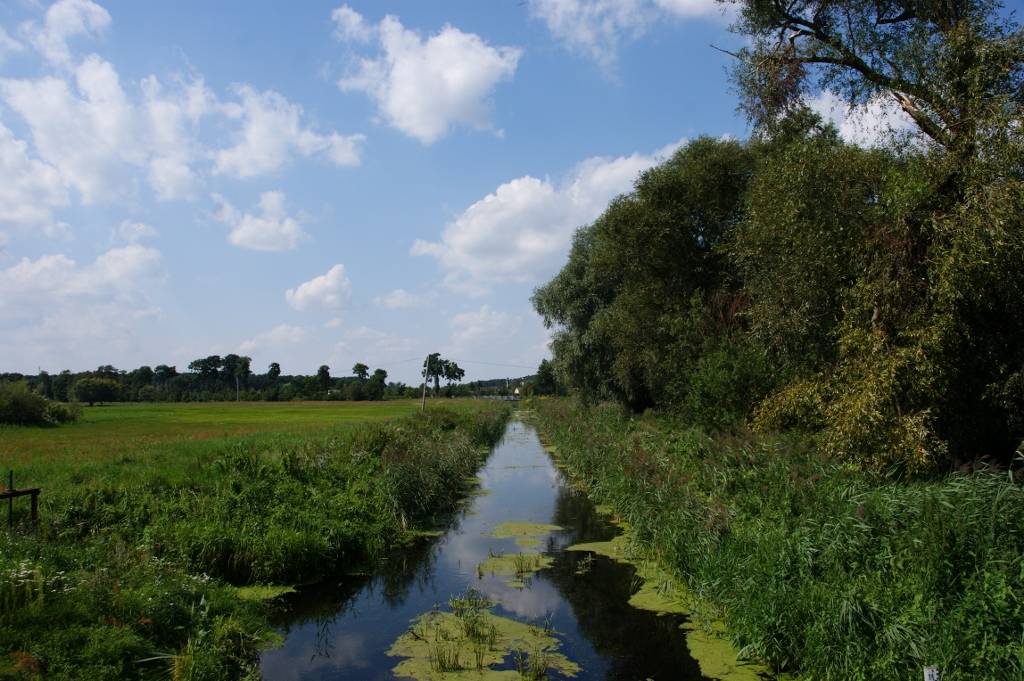
We start at the restored ruins of the Gothic castle from the 14th century, which was the residence of Sędziwój of the Pałuki family, the founder of the town. This is where the Legend of Szubin’s Coat of Arms begins. We set off along the Gąsawka River, passing the ruins of a burned-down medieval mill. Nearby, we see the tower of the historic Church of St. Martin the Bishop, dating from the 15th century. On the right, we pass Primary School No. 1 (known as “Little One”) and the “Słoneczko” Kindergarten. Along the chestnut alley, we reach the inactive railway station. We ride along the tracks and turn back before the bike path leading to Kowalewo.
We head along Powstańców Wielkopolskich Street in Szubin, which runs along the allotment gardens. On the bike path there, we reach the municipal sewage treatment plant (alternatively, the route can be extended by going straight along dirt roads toward Kołaczewo). We return to the beginning of Powstańców Street, to the square at the intersection, where the statue of the Sacred Heart of Jesus is located. Along Sienkiewicza Street, we continue past the allotment gardens toward Bydgoszcz to the Forest District, located on the outskirts of town, behind buildings on the left.
We continue straight along Wiejska Street toward Szubin-Wieś. There we turn left onto the road from Szubin to Nakło, cross it, and then turn right onto the road along the forest. Riding straight, we reach Reymonta Street, arriving at the apartment block area in Szubin. Between the blocks, we join the bike path on Pałucka Street, which turns left down to Kcyńska Street. On the right, we pass Kcyński Forest, which has a monument commemorating the massacre of the residents of Szubin County and a memorial plaque at the former Jewish cemetery. On the left side of Kcyńska Street, we pass the site of a youth facility that operated as a POW camp during World War II.
We continue toward Żnin, passing the Municipal Stadium on the right. Riding straight toward Żnin, we pass a forest and the so-called “Wesółka,” which served as the city’s cultural arena during the interwar period. We turn left toward the “Słoneczko” Kindergarten and then left again (near a construction company) onto a dirt road along the Gąsawka River. We return to the castle ruins along alleys by the river, passing allotment gardens and the municipal market.